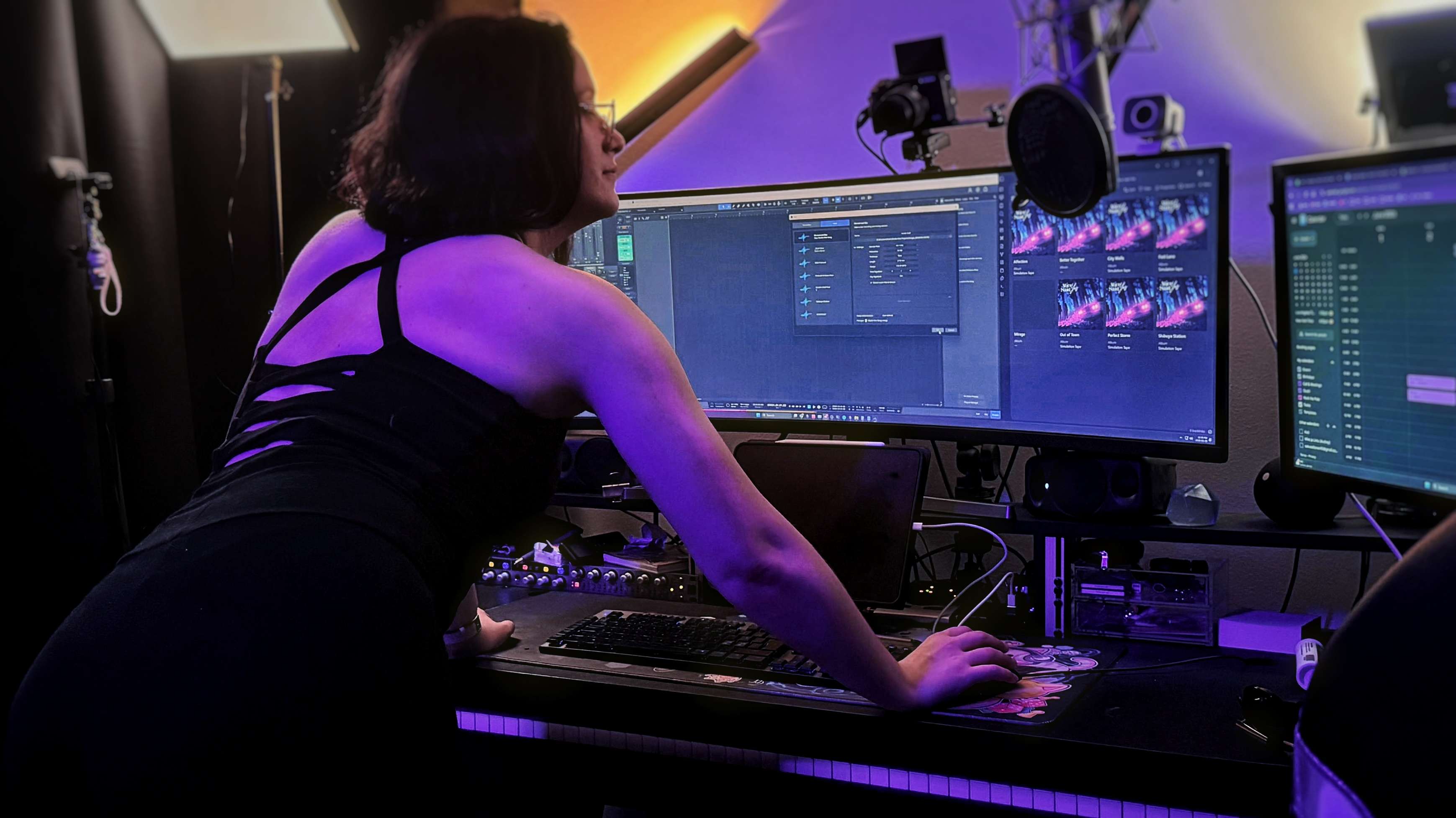
You’ve been thinking of creating a song; Maybe you’re a musician or producer yourself or maybe making music has been a long-time dream for you. However, the process of going from idea to a fully fledged song feels a bit complex and mysterious.
You may be wondering whether you want to produce it yourself, hire professional musicians, or if you should be using AI to help you out with the creation.
As a musician who handles every part of this process, I want to give you a roadmap of what it actually takes to make great music and all the steps involved behind the scenes of professional creative music-making. My goal is to help you understand the journey of making a song and feel confident deciding how to bring your vision to life, whether you do it yourself, collaborate with a professional, or hire someone to handle the whole thing.
The Blueprint: Songwriting & Toplining
Every great track starts with a great song, but what does “writing a song” even mean in the context of a collaboration? It can take a few different forms.
Full Songwriting: This is where we start from zero. You bring an idea, a character, a story, or a feeling, and I compose the music and write the lyrics from the ground up. This includes creating the chord progression, the core melody, the song structure, and the lyrical narrative. This is perfect for creators who have a vision but no musical starting point.
Toplining: This is for when you already have an instrumental track, but need the melody and lyrics that will sit on top of it. As a topliner, I take your instrumental and write a compelling vocal line and lyrics and turn it into a complete song. This is personally one of my favorite parts of the entire process of making music.
The Art of Vocal Arrangements & Harmonies
Toplining isn’t just about the main melody. A huge part of what makes a vocal performance feel rich and professional is the vocal arrangement. Creating solid backvocals requires a high level of technical understanding of voice-leading, harmony and counterpoint, all topics I love nerding on.
Vocal arrangements includes crafting background harmonies, ad-libs, and counter-melodies that support the lead vocal and add emotional depth to the song. A well-thought-out vocal arrangement can transform a simple song into an epic musical experience.
Lyric & Melody Polishing: Sometimes you already have some sort of draft, but it doesn’t feel quite right. In this case, a professional topliner can step in as a co-writer to help you refine your ideas, strengthen the structure, and polish the melody until it shines.
Songwriting is the foundation of your track. It’s about crafting a story and an emotional arc that will connect with listeners. If you need help building that foundation, my Songwriting & Toplining services are the place to start.
A Note on AI in Songwriting
With the rise of AI, it’s tempting to think you can just generate a melody. But as I discussed in my article, “The Ethics of AI Art Are Complicated,” not all AI use is equal. Using AI as a tool for brainstorming or getting a rough vocal direction for your private use is one thing. However, commercially releasing AI-generated music is at best ethically questionable (I’m begging you not to do that).
Beyond the ethics, there’s also a quality issue: Current AI models often produce an “impression of a melody” rather than a well-constructed, catchy, and emotionally resonant one. To a trained ear, these melodies sound synthetic and nonsensical: they don’t leave much breathing space, and every line tries to compete for attention.
A professional topliner & songwriter knows how to create dynamic melodies and are masters at crafting emotional and musical climaxes that make your ears beg for more. They also know how to balance familiar with new material to keep the listener engaged but not overwhelmed.
When I receive AI-generated guide vocals from clients, I often have to do significant work to strip away the fluff and create a usable melodic lines. Letting a human topliner do the work from the start guarantees a much better and more professional-sounding outcome in my opinion.
The Voice: Vocal Features & Recording
Once a song is written, it needs a voice. This is where a vocal feature comes in. Many people think this is just about “singing into a mic,” but it’s so much more.
A professional vocal performance is about understanding the song’s emotional core and conveying it through the voice. It involves knowing how to use different vocal techniques, how to harmonize effectively, and how to deliver a performance that is both technically clean and emotionally resonant.
Then there’s the “hidden” work, which is quite frankly my least favorite part of the work, but is absolutely essential to getting that polished sound:
- Vocal Comping: Recording multiple takes of each line and selecting the best parts of each to create one seamless performance.
- Editing and Pitch Correction: Vocals are edited to be as pitch and time-accurate as possible while maintaining the emotional, human performance. I personally manually edit every line using tools like Melodyne Studio to perform detailed pitch correction and timing alignment by hand. I never use automatic tuning tools. Artful editing is what separates a good performance from a “wow” performance and gives modern music its polished, professional sound.
- Knowledge of Gear & Acoustics: Understanding how to get the best recording out of your room and gear. The wrong technical setup can leave tracks with artifacts or imperfections that distract from the actual performance (plosives, input clipping, proximity effect, room noise or echo, etc)
This part of the process is where the song truly comes to life. If you have a written song and need a professional vocalist to perform it, my Vocal Feature services are what you’re looking for.
The World: Full Music Production
It takes a song from a basic concept all the way to a finished, radio-ready master.
The typical steps include:
- Songwriting: If you don’t have a song yet, this is where we start!
- Arrangement: Deciding which instruments will be in the song and what each one will play. Will there be epic cinematic drums? a string section? heavy guitars? ethereal synths?
- Instrumental Recording: Recording and editing each instrument, whether it’s a live musician or a carefully picking the right virtual instruments for the job.
- Vocal Recording: Capturing the final vocal performance, including all the harmonies and layers we’ve planned, and then editing everything together.
- Mixing: Blending all the individual tracks (vocals, guitars, drums, etc.) together. This involves balancing levels, adding effects like reverb and delay, and carving out space for each element so the song can finally become a pleasant sound experience.
- Mastering: The final step that ensures the song sounds great on all playback systems, from earbuds to car stereos to club speakers. It makes the track loud, clear, and competitive with other professional releases.
If you’re looking to hire someone to help you go take that idea to a fully finished track, my Music Production services are for you!
The Value of Music: Beyond “Work for Hire”
When you hire a musician, you’re not just paying for their time; you’re investing in their skill, their experience, and their creative vision.
The term “work for hire” often implies you pay once and own everything forever. While that can be the case, the rights to a song (who can use it, how they can use it, and who gets paid when it’s played) are a critical part of the value. A song that will be used in a commercial for a major brand has a different value than a song for a personal project.
This is why pricing is often based on the project’s scope and usage, not just an hourly rate. It’s a partnership, and the compensation should reflect the value the music brings to your project.
When I give pricing for a project, I don’t just think of it from the standpoint of “how much time will it take me?” but I also think about these:
- How many hours have I invested to build my skills
- How much have I invested in gear and plugins to be able to provide this level of quality?
- Am I able to use the work and resell it myself, or am I selling exclusive rights to it?
- How many of my rights am I selling away, and how much is that worth? Do I receive any royalties, and what are they worth to me?
I hope this guide has given you a clearer picture of the music-making process. If you’re ready to start your own musical journey, I’d love to hear about it!